
mushroom poisonings
Three Deadly Mushrooms
Mushrooms can kill. Eat only what you can identify. These are the three most deadly mushrooms in California:
Amanita phalloides | Amanita ocreata | Galerina marginata (formerly autumnalis)
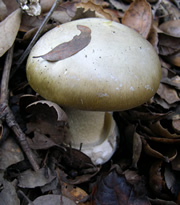 © photo by Debbie Viess |
Amanita phalloides, the Death CapAn introduced species, common and spreading, under coast live oak and cultivated cork oak - may be spreading to conifers. Can appear in summer in irrigated areas, fruits into winter. White gills and spores, annulus or skirt present (but can be lost), with a membraneous sac, or volva, at the base of the stem. Cap color variable, from the classic metallic green-yellow, to tan, brown or rarely, white. Most common cause of fatal mushroom poisoning in CA and the US.
|
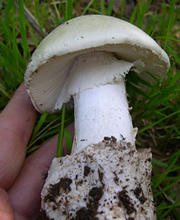 © photo by Debbie Viess |
Amanita ocreata, the Destroying AngelUncommon. Our only native deadly amanita. Occurs in mid-winter through spring, under coast live oak. White gills and spores, annulus or skirt present (but can be lost), with a membraneous sac, or volva, at the base of the stem. White cap can show yellow, tan or light brown coloration, especially in the center. Fruit body can be robust, or delicate. Has caused fatalities in CA. |
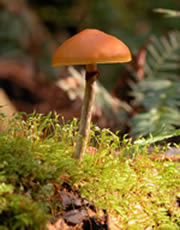 © photo by Nathan Wilson |
Galerina marginata, the Deadly Galerina(Formerly called Galerina autumnalis.) Small, delicate, wood-rotting fungus that contains the same deadly toxin as the amanitas above. It has an annulus (which can be lost) and brown spores. Seldom eaten, but has been confused with hallucinogenic mushrooms such as Psilocybes (which have purple-black spores) and may grow in the same habitat. |
 Learn more about Amanita phalloides
 back to top
If you suspect a mushroom poisoning...
If someone has become ill after eating wild mushrooms, call 911. For immediate information, contact California Poison Control at 1-800-222-1222 or visit their website.
New comprehensive treatment of amatoxins by Debbie Viess:
Amatoxin: The Deadliest of All Mushroom Poisonings
For information about pet poisonings, click here.
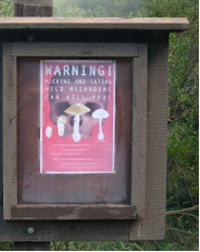
NAMA warning poster at Huckleberry Preserve in Oakland, CA.
Many emergency room visits result from toddlers and young children eating mushrooms from their lawn. While in many cases the child does not become ill, there is the potential for dangerous, life-threatening poisoning, since deadly wild mushrooms grow in California. Here’s a good source of information for concerned parents.
Read first hand reports of mushroom poisoning cases, a doctor's heroic efforts to find new treatment protocols, and hope for the future:
Preventing Mushroom Poisonings
Other Toxic Mushrooms
Mistaken Identity
A Fatal Mistake
First-Hand Stories
Life or Death Situation
New Protocol - Hope for the Future
Three Deadly Mushrooms
Knowledge is power. The North American Mycological Association maintains a registry of mushroom poisonings. To report a poisoning, follow this link to the Mushroom Poisoning Case Registry.
